
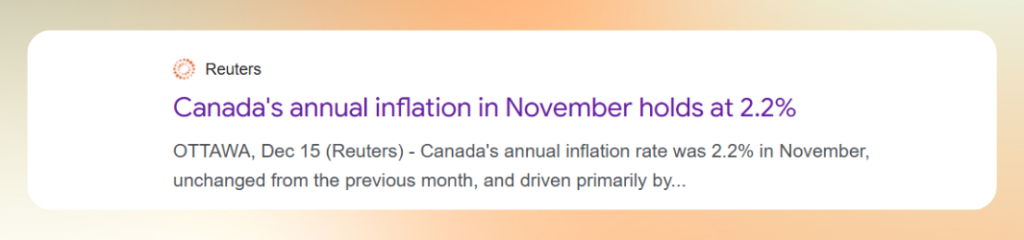
Canada’s annual inflation rate remained unchanged at 2.2% in November, according to new data from Statistics Canada. The reading matched October’s pace and came in slightly below economist expectations of 2.3%.
While overall inflation stayed steady, the details show a shift in what is driving prices higher and lower across the economy.
Food Prices Take the Lead 🍎🥩
The main source of upward pressure in November came from food costs.
- Food prices rose 4.2% year over year, the fastest increase since December 2023
- Grocery prices climbed 4.7%
- Restaurant food prices increased 3.3%
Statistics Canada pointed to several factors behind higher food costs, including poor weather in key growing regions and higher import costs tied to U.S. tariffs. Beef prices remain elevated due to a smaller cattle herd across North America, while coffee prices have been affected by cross-border trade dynamics.
Gasoline and Shelter Help Offset Inflation ⛽🏠
Rising food prices were partially balanced out by declines in other major categories.
- Gasoline prices were 7.8% lower than a year ago, despite a 1.8% month-over-month increase in November
- Shelter costs also eased on an annual basis
The ongoing year-over-year drop in gasoline prices has played a key role in keeping overall inflation contained. Since April, the removal of the carbon levy on gasoline has helped suppress fuel costs.
Without gasoline included, November’s inflation rate would have been 2.6%.
Core Inflation Shows Signs of Cooling 🎯
Core inflation measures, which strip out volatile items like food and energy, delivered encouraging news.
- This was the first time since March that core inflation fell below 3%
- CPI-median declined to 2.8%, down from 3% in October
- CPI-trim also eased to 2.8%
These indicators have hovered near 3% since tariffs began affecting prices earlier this year, making November’s decline a notable development.
What This Means for the Bank of Canada 🏦
Economists say the data should be reassuring for policymakers.
One analyst noted that the numbers suggest Canada is not entering a stagflationary environment, as price pressures remain contained even with trade disruptions in place.
Following the inflation release:
- The Canadian dollar edged slightly higher, trading near 72.67 U.S. cents
- Two-year government bond yields fell by about 2.3 basis points to 2.486%
Does Victor recommend locking in your Variable rate mortgage at this time? 🤔
☐ Yes
☐ No
☑ Not Yet
Economic headlines can be confusing, but your mortgage plan does not have to be. At Go Approval, we break down the data and turn it into clear guidance tailored to your situation. Reach out anytime to explore your next steps with confidence.