
📊Canada’s Inflation Holds at 1.7% in May
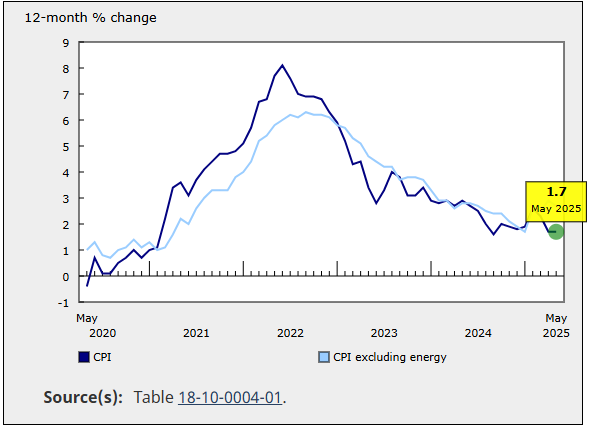
Canada’s inflation held steady in May, with the Consumer Price Index (CPI) rising 1.7% year-over-year—matching April’s increase. While some everyday costs are still climbing, others are easing, giving Canadians a bit of breathing room.
🔍 What’s Behind the Numbers?
- 🏠 Housing pressures cool slightly: Rent increases slowed across the country, especially in Ontario where price growth dropped from 5.4% in April to just 3.0% in May. More rental supply and slower population growth played a role in this moderation.
- 📉Mortgage interest costs also eased, rising 6.2% compared to 6.8% the month before—marking the 21st straight month of deceleration.
- ✈️Travel and transportation take a dip: Prices for vacation packages and flights fell in May. Travel tours dropped 0.2% and airfares were down 10.1% from last year—great news for summer travelers.
- ⛽Gasoline prices stay low: Gas prices were still 15.5% lower than May 2024, thanks to the removal of the carbon tax. However, they did creep up 1.9% from April, partly due to the seasonal shift to summer fuel blends.
- 📱Cell phone bills see a bounce: After months of sharp declines, cell service prices dropped less dramatically this time (down 5.5% annually), and actually rose 7.2% month-over-month as promotions ended.
- 🚗New car prices keep climbing: Prices for new vehicles jumped 4.9% compared to last year, pushed higher by rising costs for electric models.
📈 Inflation Without Energy
If you remove energy prices from the mix, inflation is still a bit higher—2.7% year-over-year in May, down slightly from 2.9% in April. Month-over-month, overall prices rose 0.6% (or 0.2% when adjusted for seasonality).

📉 Canada’s Condo Market Slips 7%
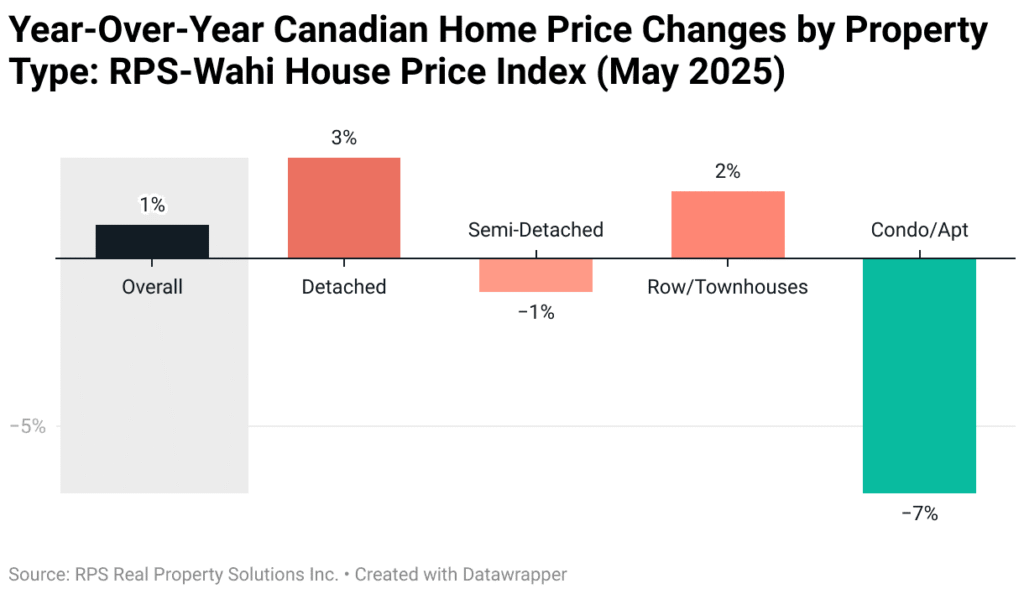
While Canada’s housing prices inched up 1% year-over-year in May, it marked the smallest annual gain since August 2023—another sign that the real estate market is cooling. A big reason? Condos are dragging down the national average.
According to the RPS-Wahi House Price Index, condo values plunged 7% nationally compared to last year. That’s one of the steepest annual drops on record since the index launched in 2005—matching declines seen during the last stages of the Bank of Canada’s previous rate-hike cycle.
In Toronto, the trend is even more striking:
- 📉 Average condo price fell 6.4% to $683,413
- 🏷️ Condo sales dropped 25.1% year-over-year, showing less demand even with falling prices
Meanwhile, detached homes and townhouses are still holding their ground:
- Detached home prices rose 3%
- Townhouses saw a 2% increase
That said, these gains were also weaker than in April, suggesting that market momentum is slowing across the board.
On a more positive note, some cities are bucking the trend:
- Quebec City led the way with 14% price growth, driven by high demand and limited supply
- Edmonton saw a 10% increase, while Montreal and Victoria both recorded 8% gains
Despite these regional bright spots, price growth either slowed or flattened in all 13 major metro areas compared to April.

While inflation held steady in May, the details tell a more complex story. Everyday costs like rent and gas are easing, but other expenses—like vehicles and phone plans—continue to climb. At the same time, Canada’s housing market is showing signs of a shift, with condo prices dropping sharply even as detached homes and townhouses hold firm in many regions.
📉 Whether you’re navigating rising expenses or watching the real estate market for your next move, now’s a smart time to revisit your financial and mortgage plans.
Have questions about how these trends affect your buying power or renewal strategy? We’re here to help you make informed, confident decisions.
📲 Let’s talk about your next step.