
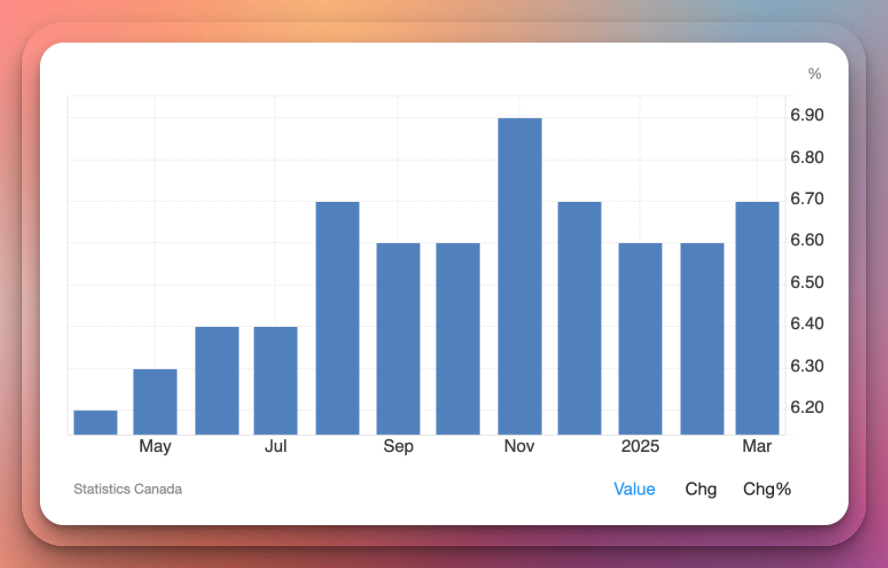
StatsCan’s latest report shows 33,000 jobs vanished in March, pushing the unemployment rate to 6.7%. It’s not the update we wanted, but it’s got me thinking: could this push the Bank of Canada to cut interest rates at their April 16 meeting? If you’re considering a home purchase, a mortgage adjustment, or just looking to lighten your monthly load, this might be a moment to watch.
So, what happened?
Economists were forecasting a small gain—around 10,000 jobs—but instead, we saw the first job losses since early 2022. Full-time positions took the hardest hit, down 62,000, mostly in the private sector. It’s not hard to see why. Industries like manufacturing and retail are feeling the squeeze, especially with new U.S. tariffs kicking in. Stellantis just paused its Windsor auto plant for two weeks, leaving 4,000 workers in limbo. Add falling energy prices and the carbon tax rollback, and it’s clear why hiring’s expected to slow into 2025—particularly in trade-heavy provinces like Ontario and Quebec.
Here’s where it gets relevant for you. This jobs dip might be the signal the Bank of Canada needs to lower rates. They’ve been steady so far, navigating some rocky economic patches, but this report could change the game. If they cut rates—maybe as soon as April 16—borrowing costs could ease up.
That might mean lower mortgage payments, more room for a big move like buying a home, or an opportunity to refinance on better terms. Plus, there’s another piece to this puzzle: housing inventory is starting to climb. With more homes on the market and rates potentially dropping, buyers could find themselves in a rare sweet spot—more choice and better affordability rolled into one.

A softer job market isn’t something to celebrate, but it could create real openings for your finances. If rates drop and inventory keeps rising, it’s a practical chance to save, stretch your budget, or jump into the housing market at the right time. With the BoC’s next decision just weeks away, now’s a good time to think about how you could turn this into an advantage.

💸 What the Other Big Banks Are Saying
Let’s go rapid-fire through some more expert takes:
🔵 BMO’s Douglas Porter: Called March’s employment report the “softest in three years,” and says the Bank of Canada will likely wait for more data before acting—but admits the “deep sag in global markets” and weak jobs numbers keep an April rate cut very much alive. He adds that inflation could ease in April thanks to falling energy prices and the carbon tax rollback, giving the BoC more room to maneuver. Still, he sums it up perfectly: “The situation is, shall we say, fluid.”
🔵 RBC’s Claire Fan: Sees further job market weakness ahead if the U.S. continues with aggressive trade tariffs, especially in auto and manufacturing. She still thinks a cut in April is possible but believes fiscal policy will need to play a bigger role moving forward.
🟣 Scotiabank’s Derek Holt: Thinks the Bank of Canada might downplay the job losses due to seasonal distortions, but also warns that the trade shock is worse than anyone anticipated. His take? “Reasons matter,” and these are big ones.
🟢 TD’s James Orlando: Believes the labour market is softening and that those losing their jobs are taking longer to find new ones. He’s calling for at least 50 basis points of cuts over the coming months to help buffer the economy.
🟡 CIBC’s Andrew Grantham: Says the wheels may be starting to come off the job market. With hiring slowing and more trade pain coming, he sees the BoC cutting rates soon—though the exact timing may depend on upcoming consumer and business sentiment data.
As someone who’s been in the mortgage game for years, I’m here to help you sort it out. At Go Approval Mortgages, I focus on turning shifts like these into opportunities for my clients. Want to talk about how this could affect your mortgage or why this might be the perfect time to buy? Reach out to me directly at [email protected] or give me a call at 647-880-5554