
In a significant economic development, Canada’s inflation rate has finally hit the Bank of Canada’s ideal target of 2%, marking the slowest growth in consumer prices since February 2021. This news, emerging from Statistics Canada’s latest report, indicates a pivotal moment for the Canadian economy, suggesting both stabilization and the effectiveness of monetary policy adjustments.
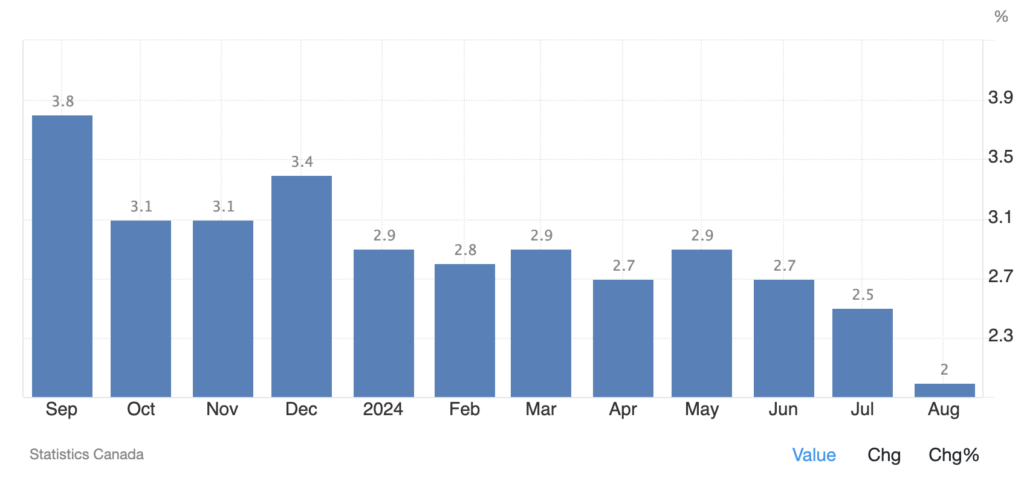
The consumer price index (CPI) for August showed an inflation rate that not only met but slightly undercut expectations. Analysts, polled by Reuters, had anticipated a 2.1% rise, yet the actual figure stood at an even 2%. This adjustment in inflation was mirrored in the Bank of Canada’s preferred measures of core inflation: the CPI-trim and CPI-median, which also showed signs of cooling, dropping to 2.4% and 2.3% respectively.
The primary driver for this slowdown in inflation has been the decline in gasoline prices, providing relief at the pumps for consumers. However, the broader economic landscape shows a more complex picture. Shelter costs, a significant component of the CPI, continue to surge with rent prices increasing by 8.9% and mortgage interest costs soaring by 18.8% compared to the previous year. These figures highlight ongoing pressures in the housing market, despite the overall cooling of inflation.
This inflation report comes in the wake of proactive measures by the Bank of Canada, which has embarked on a path of monetary easing. Over the summer, the central bank executed three consecutive rate cuts, reducing the benchmark rate by a total of 75 basis points. These actions were taken in response to signs of economic slowdown, aiming to stimulate economic activity by making borrowing cheaper.
Economists from the Royal Bank of Canada, Nathan Janzen and Abbey Xu, suggest that the road is clear for further rate reductions. They predict a cautious approach with potential 25 basis points cuts per meeting, aiming to lower the overnight rate to 3%. However, they also hint at the possibility of more aggressive cuts should the economy show signs of further softening. This strategy reflects a delicate balancing act between fostering economic growth and keeping inflation within manageable bounds.
For the average Canadian, this alignment with the inflation target might start to translate into a more predictable cost of living, although the persistent high costs in housing could still weigh heavily on household budgets. The Bank of Canada’s actions are likely to influence everything from savings rates to loan costs, potentially easing financial pressures but also requiring careful financial planning by consumers.
As Canada navigates through these economic adjustments, the focus will remain on how these inflation trends evolve and how effectively the Bank of Canada can steer the economy back to robust health without reigniting inflationary pressures. The current alignment with the inflation target is a positive sign, but the journey towards economic stability is ongoing, with housing costs and global economic conditions continuing to pose challenges.
Contact me at [email protected] for more information! I’ll break it down for you and help you figure out your best next steps in making home ownership a reality. (647) -880-5554