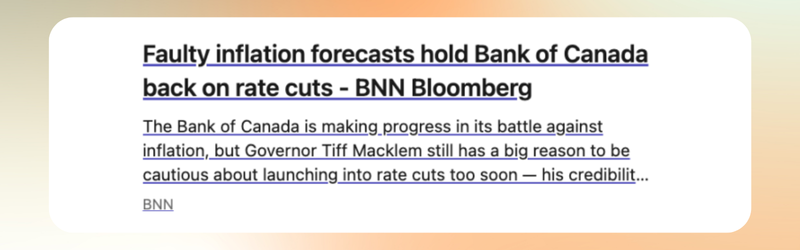
In a pivotal week for Canadian finance, the Bank of Canada stands at a crossroads, with market observers and analysts closely monitoring for signs that might hint at future monetary policy adjustments.
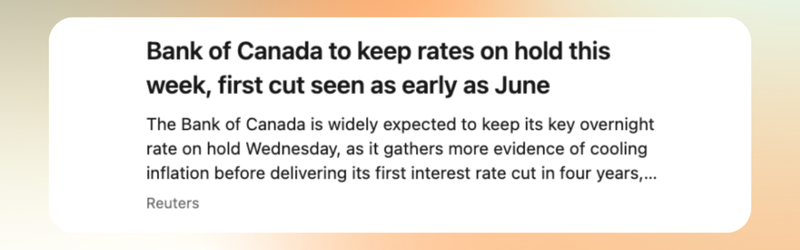
The central bank’s upcoming decision on interest rates, anticipated this Wednesday, is enveloped in widespread speculation that it may maintain the current rate at 5 percent, marking the sixth consecutive period without change. This steady rate, a peak not seen in over two decades, underscores the delicate balancing act the Bank of Canada faces amid fluctuating economic signals.
Since last July, when the policy rate was last adjusted, there’s been a palpable shift in economic dynamics, with inflation gradually retracting into the bank’s comfort zone and economic performance moderating. This has led to a burgeoning consensus among financial experts and market traders that a strategic pivot in monetary policy could be imminent, potentially as soon as June.
The central narrative revolves around the economy’s tepid response to high interest rates, with significant indicators like business insolvencies on the rise and labor market tightness easing. The recent report from Statistics Canada, revealing an unexpected dip in employment numbers and a hike in the unemployment rate to 6.1 percent, only adds to the narrative of a labor market cooling off.
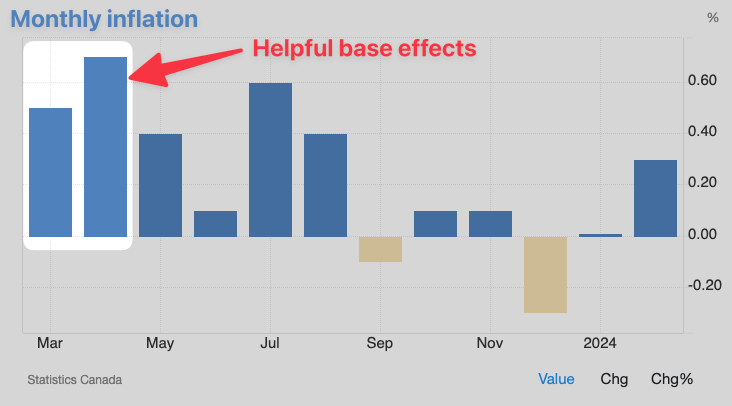
Yet, the Bank of Canada’s decision-making process is nuanced, taking into account multiple economic indicators and forecasts. Inflation reports from the past two months have been encouraging, with the Consumer Price Index inflation hovering just below 3 percent, nudging closer to the bank’s 2 percent target. These positive signs, however, are weighed against the backdrop of ongoing fiscal uncertainties, particularly with the federal budget announcement looming on the horizon.
Central to the Bank of Canada’s cautious stance is the potential impact of premature rate cuts, especially on real estate prices and borrowing costs. The concern is that easing too soon could re-inflate housing market bubbles, putting additional strain on affordability and financial stability. Nonetheless, the argument for a softer monetary policy stance is gaining traction, especially with core inflation metrics showing promising trends towards stabilization.
As analysts pore over these developments, the divergence between Canadian and U.S. economic performance becomes increasingly relevant. The U.S. economy’s resilience, highlighted by robust growth and employment figures, contrasts sharply with Canada’s more subdued economic landscape. This disparity might lead to divergent monetary policy paths for the Bank of Canada and the U.S. Federal Reserve, with potential implications for currency valuations and cross-border economic dynamics.
In anticipation of the Bank of Canada’s forthcoming rate decision and Monetary Policy Report, stakeholders are also keenly awaiting updates on the “neutral rate” estimate. This benchmark, reflecting the theoretical policy rate conducive to an economy operating at full potential without stoking inflation, serves as a critical indicator of future monetary policy directions.
As the Bank of Canada deliberates on its next move, the financial community remains on tenterhooks, aware that the forthcoming decisions could herald a significant shift in Canada’s economic trajectory. With the balance between fostering growth and curbing inflation more precarious than ever, the central bank’s actions in the coming weeks could set the tone for Canada’s economic policy and market expectations through 2024 and beyond.