
As homeowners and investors alike monitor the pulse of the Canadian economy, recent data suggests a turning point that may influence future mortgage rates and market dynamics. The latest statistics indicate a notable shift in inflation rates, presenting both opportunities and challenges in the mortgage landscape.
Recent Inflation Trends And Mortgage Implications
For the first time since mid-2021, Canadian inflation rates have edged down into the “2s,” marking a significant transition. The headline inflation now sits at 2.9% year-over-year, aligning with expert predictions and showing a slight uptick from the previous rate of 2.8%. This decrease in inflation brings a wave of optimism, especially from the Bank of Canada (BoC), which has been vigilantly tracking these trends.
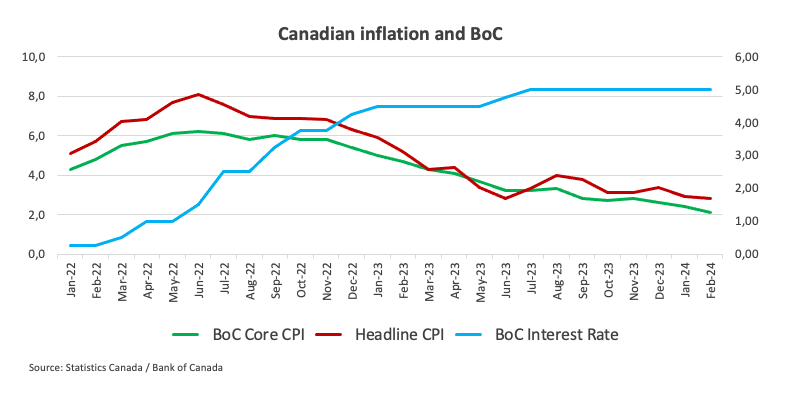
More encouraging is the average core inflation, which has dropped to 2.95%, surpassing expectations of 3.1% and down from the previous 3.15%. This metric, particularly significant for monetary policy, indicates a potential cooling in the market, despite the BoC’s ongoing concerns about inflationary pressures.
Market Responses And Mortgage Rate Projections
The dip in inflation has prompted mixed reactions in the financial markets. While U.S. yields have increased slightly, Canadian bond yields have experienced a modest decline, reflecting nuanced responses to domestic and international economic signals. This divergence could affect mortgage rates, with the market now anticipating a 54% likelihood of a BoC rate cut as early as June, increasing certainty for adjustments by July.
Despite these optimistic forecasts, certain areas such as shelter inflation remain high at 6.5% year-over-year. Mortgage interest costs have seen a slight reduction to 25.4%, yet they continue to significantly impact the overall consumer price index (CPI). This scenario suggests that while broader inflationary pressures may be easing, specific components that directly affect homeowners remain elevated.

Comparative Insights And Global Implications
Contrasting these developments with the situation in the United States reveals divergent paths in managing economic pressures. While the U.S. grapples with its inflation metrics, Canada’s recent adjustments reflect a more immediate response to changing economic conditions, possibly indicating a more proactive monetary policy stance compared to its southern neighbour.
What This Means For Homeowners And Investors
The current economic environment, characterized by fluctuating inflation rates and the potential for lowered mortgage rates, offers a mixed bag of implications for homeowners and real estate investors in Canada. On one hand, the possibility of reduced mortgage rates could make home buying more accessible and appealing. On the other hand, persistent high costs in certain sectors underscore the need for careful financial planning and market analysis.
As the BoC continues to navigate these complex economic waters, the next few months will be crucial in shaping Canada’s economic trajectory. Stakeholders should keep a close eye on further economic reports and market adjustments, which will provide critical insights into the evolving mortgage landscape and broader economic health.
This period of transition presents a pivotal moment for understanding and responding to the shifts in Canada’s economy, with direct implications for the mortgage market and broader financial strategies.